 |
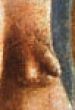
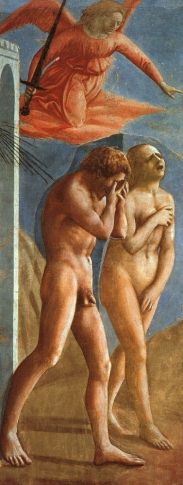
Tommaso |
Previous (Pompeii)
3. The Renaissance.
Thousands of statues and paintings featuring nude male figures - virtually all intact - were created during the Renaissance, when Christian diffidence gave way before ideals of classical beauty. This is only a small selection.
|
Tommaso |
Capella Brancacci, Chiesa del Carmine, Florence
 |
 |
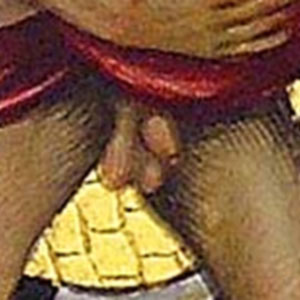 |
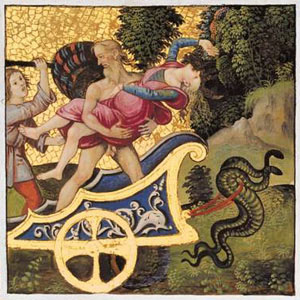
The Rape of Persephone (c.1502) by Pinturicchio (1454–1513)
Persephone/Proserpina, daughter of Demeter/Ceres, was carried of to the
Underworld by Hades/Pluto.
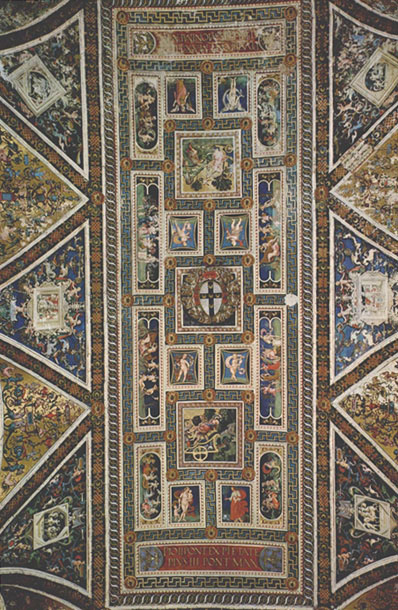
The fresco is the more remarkable for being in a space devoted to Pope
Pius II
vault of the Piccolomini Library, Duomo, Siena
 |
|
 |
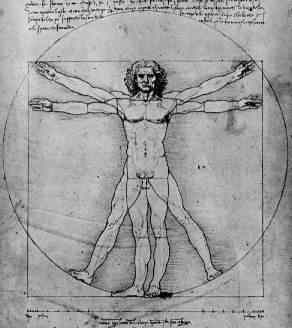
Leonardo da Vinci's "Vitruvian man" is much copied - though his intact penis is seldom shown clearly. |
 |
|
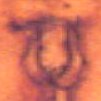 |
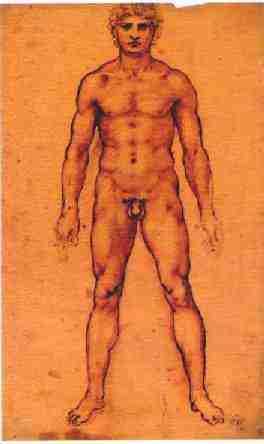
Again, in a few simple strokes, Leonardo indicates the corona, the acroposthion - and the assymetrical testicles. |
Leonardo da Vinci
A nude man standing facing the spectator
property of Her Majesty Queen Elizabeth II
(Royal Library at Windsor)
Leonardo imposed the thinking of his day on his drawings. In his famous cross-section of couple having intercourse, he invents tubes from the man's spinal cord (to transmit an "animal" or "soul" element), heart (a "spiritual" element) and testes (a :material" element) passing through the length of the penis. Perhaps he misinterpreted the two corpora cavernosa and the corpus spongiosum as these tubes.
 |
|
 |
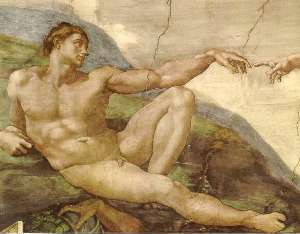
One of the best known nude male images in the world. Michaelangelo's Adam is portrayed with a baby's penis - presumably to indicate his innocence. |
|
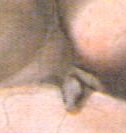
As such, this is quite accurate - a baby's foreskin may extend far beyond the end of his glans. (The closeup was taken after the recent restoration.) |
|
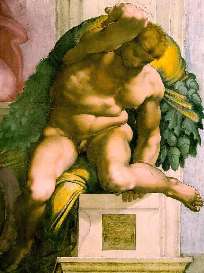 |
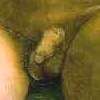
One of the enigmatic male nudes (ignudi) on the Sistine Chapel ceiling. He is portrayed with a small adult penis. |
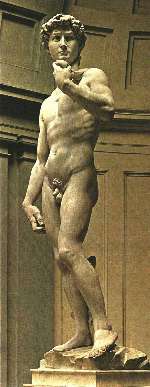 |
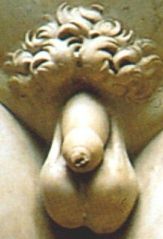 David's penis is relatively small, probably to avoid attracting attention (the viewers' eyes are level with his feet), and following classical ideals. He is intact because:
- Galleria dell'
Accademia, Florence
|
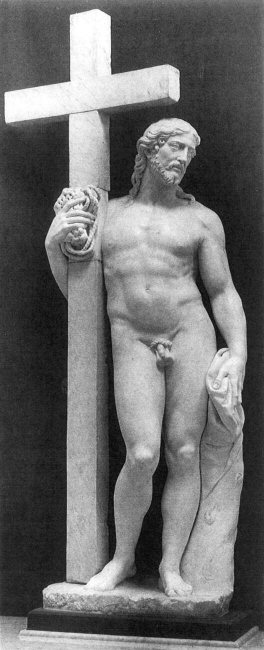 |
Michelangelo abandoned his first version
(1518) of the risen Christ because of a flaw in the marble. It was not recognised as his until 1997. His better known second version (in Santa Maria Sopra Minerva in Rome) is covered by a bronze loincloth and is believed to have been vandalised. |
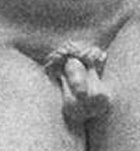 The statue has a foreskin presumably because Michelangelo was more concerned with Renaissance ideals of male beauty than historical accuracy. |
- San Vincenzo Monastery, Bassano Romano
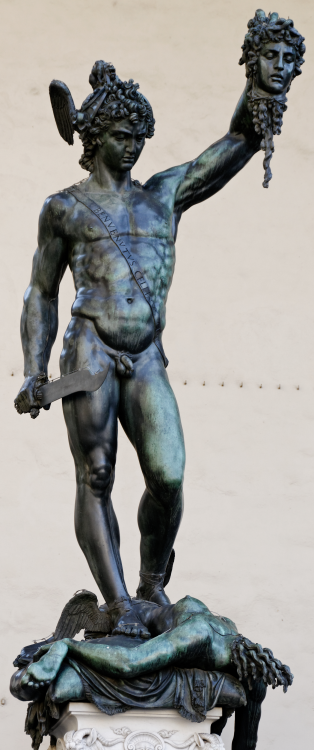 |
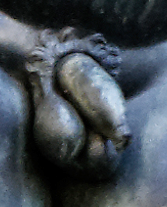 Perseus with the Head of Medusa by Benvenuto Cellini (1500-1571) has a well-defined acroposthion complete with "spout" |
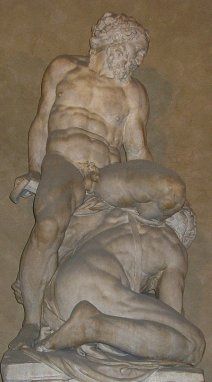 |
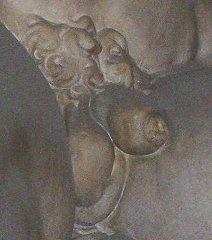 Hercules by Vincenzo de' Rossi |
Palazzo Vecchio, Florence
 |
|
 |
 |
|
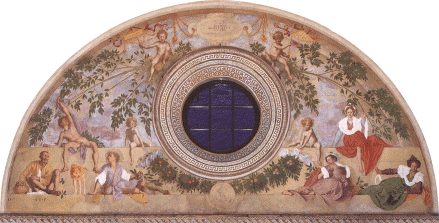
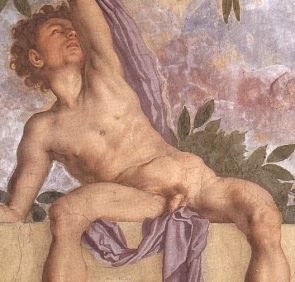
Jacopo Pontormo, |
|
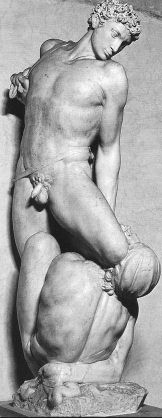 |
 Allegory of |
Boboli Gardens, Florence
 |
 |
 |
|
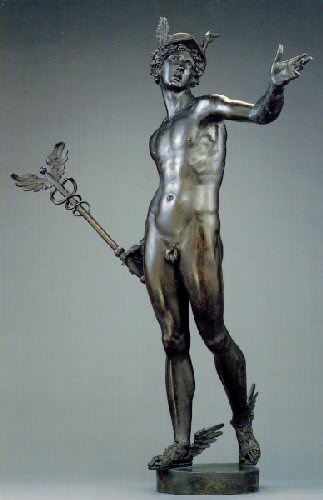
| Mercury, by Johann Gregor van der
Schardt (c. 1570-80) has a flaring, detailed acroposthion. |
|
- the Getty Center
 |
 |
|
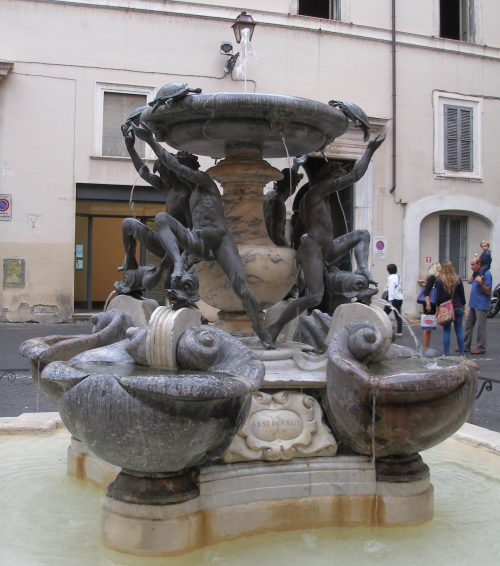
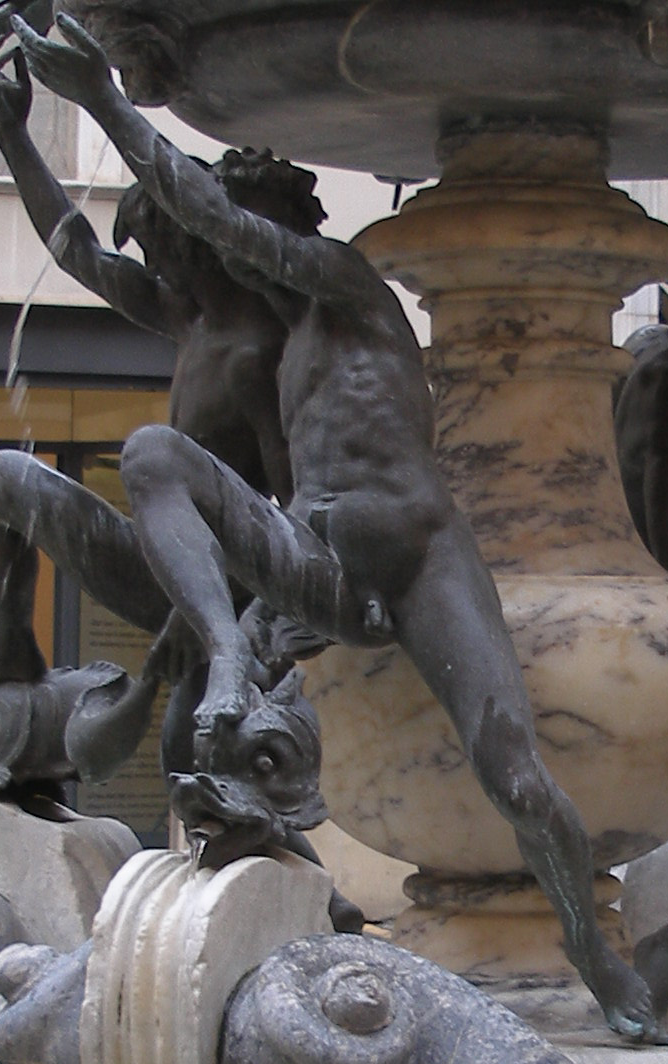
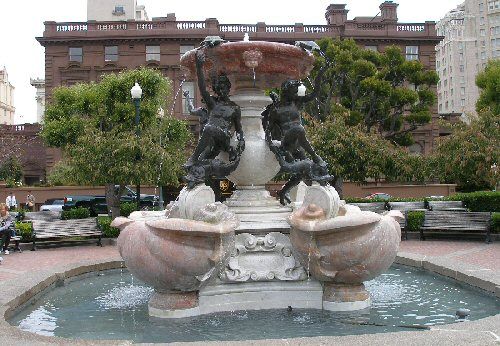
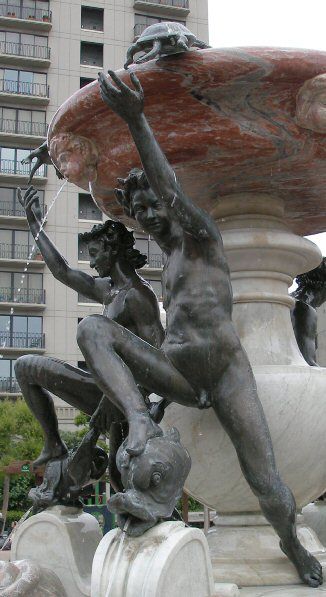
| The Fontana delle Tartarughe (Fountain of the Tortoises) in Piazza Mattei, Rome, was designed in 1581 by Giacomo della Porta, with bronze figures by Taddeo Landini. | 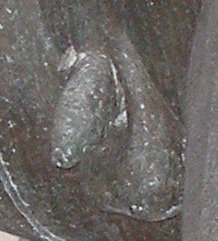 |
|
 |
 |
|
| This replica was made in the early 20th century and installed in its present location, Huntington Park, San Francisco, in 1954. | 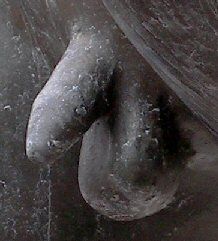 |
|
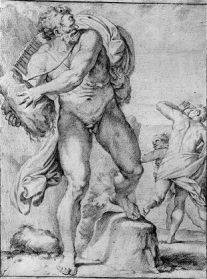 |
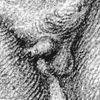 The cyclops' penis is boyish after the classical manner, with a long foreskin... |
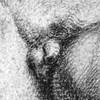 ...and a detailed acroposthion. (c.1597) |
 |
|
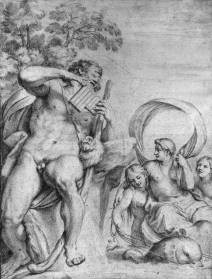
Polyphemus and Acis |
Polyphemus and Galatea |
||
|
after Annibale Carracci (1560-1609) |
|||
Biblioteca Ambrosiana
Milan
Next (post-Renaissance)
Back to the Intactivism index page.
If any pictures are on this non-profit, educational site in breach of your copyright, please notify me and they will be removed.